
Carpenters and builders need two things from a glove that usually pull against each other: protection from splinters, cuts and abrasion, and enough feel to hold a screw or read a tape. This guide to the best gloves for carpenters and builders matches common site tasks to a glove that suits them.
What carpenters’ and builders’ hands are exposed to
- Splinters and abrasion. Rough-sawn timber, blocks and formwork wear through skin over a working day.
- Cuts. Sheet metal, flashing, glass, blades and fresh-cut edges cause most serious hand injuries on site.
- Adhesives, sealants, stains and preservatives. Many irritate skin, and some epoxy and polyurethane products can cause skin sensitisation.
- Cement, mortar and plaster. Wet cement is highly alkaline and can burn skin (HSE: cement).
- Vibration and fatigue. A glove that fits badly makes the hand work harder to grip tools (HSE: choosing the right gloves).
What the research says
Findings from safety regulators and published studies, mostly from Australia, the UK and the US.
- Wood does not show on most X-rays. In one study, 38% of foreign bodies in the skin were missed at the first check. A splinter left in place raises the risk of wound infection, so wooden splinters should be removed (American Family Physician, 2020).
- A wound with a splinter left in it is more likely to become infected. Australian guidance recommends a tetanus booster for a deep or dirty wound if the last dose was more than five years ago (Australian Immunisation Handbook). Ask your doctor what applies to you.
- Disposable gloves do not stop splinters. Use a coated or leather work glove for rough-sawn timber, framing and demolition.
- Timber treated with copper chrome arsenate (CCA) contains arsenic and chromium. Wash hands and arms before eating, drinking or smoking after handling it, and never burn the offcuts (HealthyWA).
- Some wood dusts cause allergic skin rashes, and wood dust is linked to cancer of the nose and sinuses (WorkSafe Victoria).
- Epoxy resin can pass through ordinary rubber gloves in about 30 seconds. Nitrile is the recommended material, and vinyl is not fully protective (DermNet: epoxy resin allergy).
- Isocyanates in polyurethane foams, varnishes and adhesives can cause dermatitis and allergic reactions. Thin latex is unsuitable; nitrile of the same thickness resists better (Safe Work Australia).
Which glove for which site task
| Task | What the glove must do | Bergamot option | Datasheet (PDF) |
| Framing, fixing, handling timber and boards | Reusable, breathable, good grip in dry or lightly oily conditions | Beflex Nitrile Foam General Purpose Gloves (15-gauge nylon and spandex liner, foam nitrile coating) | Download Beflex Nitrile Foam |
| Second fix, measuring, using a phone or tablet on site | Second-skin fit, dexterity, touchscreen use | Beflex 21G PU-Coated Nylon & Spandex Gloves | Download Beflex 21G PU |
| Carrying blocks, bricks, rough timber and scaffold fittings | Abrasion resistance for high-friction work | Beflex Nitrile Smooth General Purpose Gloves (13-gauge polyester liner) | Download Beflex Nitrile Smooth |
| Sheet metal, roofing, glass, blades and demolition | Cut-resistant work gloves that keep dexterity | Beflex Tungsten Cut Resistant Gloves, or Beflex Cut Resistant Gloves (Tungsten: ANSI cut level A8; Cut Resistant: cut level E) | Download Beflex Tungsten Download Beflex Cut Resistant |
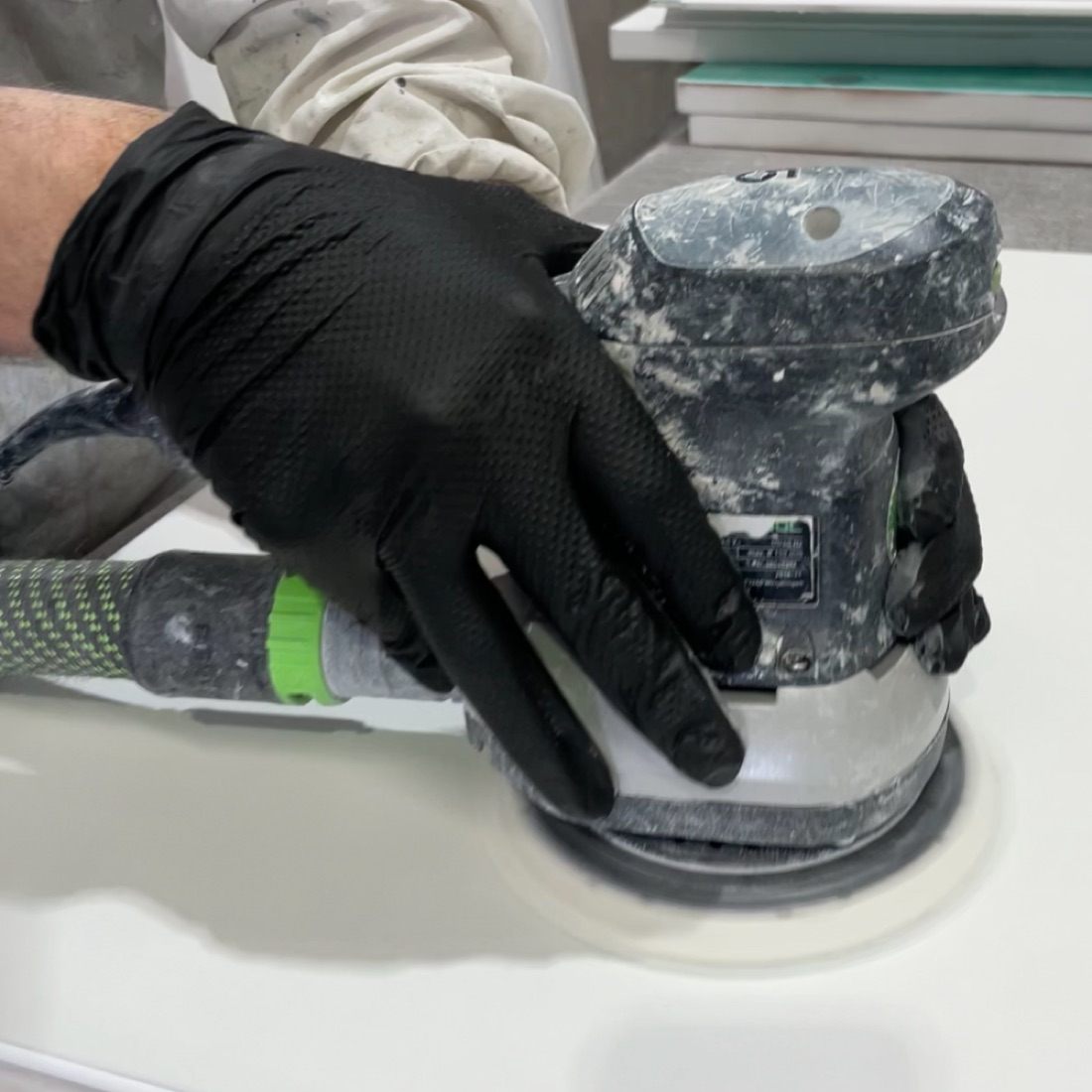
| Adhesives, sealants, staining, oiling and painting | A disposable barrier with grip, thrown away after the job | Grip-X Nitrile Powder Free Gloves (Black), or SE Black Nitrile Powder Free Examination Gloves (Grip-X is heavy-duty with a diamond-textured grip; SE Black is thinner) | Download Grip-X Black Download SE Black |
| Mixing and placing wet cement or mortar | Liquid-proof coating over the whole hand | Fully Dipped Jersey Gloves with Safety Cuff A full nitrile coating on a cotton jersey shell. | Download Fully Dipped Jersey |
Beflex gloves are SIRIM registered.
Beflex coated work gloves have a breathable back and are not liquid-proof. Use disposable nitrile or a fully coated glove for wet and chemical work.
Six glove habits for site work
- Match the glove to the task and change when the task changes. No single glove covers timber, sheet metal and wet cement.
- Take gloves off around rotating machinery such as pillar drills and lathes, where a glove can be caught and pull the hand in.
- Replace gloves when the coating is worn through. A worn palm gives less grip and no protection.
- Use disposable gloves for adhesives and sealants, and bin them afterwards. Cured adhesive ruins a reusable glove.
- Wash cement and plaster off skin promptly with soap and water.
- Get the size right. Loose gloves snag; tight gloves tire the hand.
Getting the size right
A glove that is too tight tears and tires the hand; one that is too loose snags and loses grip. Measure across the palm just below the knuckles. Standard palm widths for nitrile examination gloves (ASTM D6319) are S 80 mm, M 95 mm, L 110 mm and XL 120 mm (each ±10 mm). When buying for a team, ask each person for their size.
Buying for a building firm or hardware distributor
In Malaysia, the Occupational Safety and Health Act 1994 and the USECHH Regulations 2000 require employers to assess chemical exposure and provide suitable protective equipment. Bergamot is a Malaysian glove supplier, supplying work gloves and nitrile gloves wholesale by the carton to contractors, joinery workshops and hardware distributors, with private-label packing for importers.
Contact us, email info@bergamot.com.my or WhatsApp +6012 714 4186 for samples, specifications and bulk pricing.
Frequently asked questions
What are the best work gloves for carpenters?
A thin, breathable coated glove such as Beflex Nitrile Foam or Beflex 21G PU for general carpentry, because it protects against splinters while keeping fingertip feel. Add a cut-resistant pair for sheet materials and blades.
What cut level do builders need?
It depends on the task. For sheet metal, roofing and glass, a high cut level such as ANSI A8 (Beflex Tungsten) is appropriate. For general handling, a lower level with better dexterity is usually enough.
Can I use my phone with work gloves on?
Yes, with touchscreen-compatible gloves. Beflex 21G PU and Beflex Tungsten are both touchscreen compatible.
Are coated work gloves waterproof?
Palm-coated gloves with a breathable back are not. For wet cement or liquids, use a fully dipped glove or disposable nitrile.
More glove guides by trade
- Gloves for mechanics
- Gloves for panel beaters and spray painters
- Gloves for car detailers
- Gloves for plumbers
- Gloves for concreters and tilers
- Gloves for painters and decorators
- Gloves for kitchens and food handling
- Gloves for cleaning and pest control
General information only. Follow the safety data sheet and label of the products you use and your local workplace safety regulations.