
Cleaners and pest control technicians handle chemicals all day, often with wet hands and often in other people’s premises. This guide to the best gloves for cleaning and pest control matches each task to a glove that suits it, for cleaning contractors, facility teams and pest control operators.
What cleaning and pest control do to hands
- Wet work and detergents. Frequent contact with water and cleaning products damages skin and causes work-related contact dermatitis, most often on the hands (HSE: work-related contact dermatitis).
- Bleach, acids and alkaline degreasers. Concentrates burn or irritate skin, especially during dilution.
- Washrooms, waste and bodily fluids. Gloves are the barrier against infection, and must be changed between areas.
- Pesticides. Many are absorbed through the skin. The product label states the protective equipment required, and it must be followed.
- Sharps and broken glass. Hidden in waste and under furniture.
What the research says
Findings from safety regulators and published studies, mostly from Australia, the UK and the US.
- For most pesticides, the skin is the main route into the body. Around 90% of pesticide users’ exposure to non-fumigant products is through the skin (University of Florida IFAS).
- Not all skin absorbs at the same rate. In a classic study, the forehead, scalp and groin absorbed far more than the forearm, so wiping sweat from your face with a contaminated glove is a real exposure (Nebraska Extension).
- Labels can demand more than a disposable glove. One bifenthrin label requires elbow-length chemical-resistant gloves for mixing and loading, plus overalls and face protection (⬇ example label).
- Never mix bleach with acids or vinegar, which releases chlorine gas, or with ammonia, which releases chloramine gas (Health Canada).
- Plain water is the biggest single cause. In 18 years of Australian clinic data, water and wet work caused over a third of irritant dermatitis cases, with soaps and detergents next (⬇ Safe Work Australia).
- A chemical can pass through a glove with no visible hole. The time this takes is the breakthrough time, and it varies by chemical, glove material and thickness (CCOHS: glove selection).
- Rodents can carry leptospirosis and salmonella. Wear gloves when handling rodents, traps or anything contaminated with their urine (SafeWork NSW).
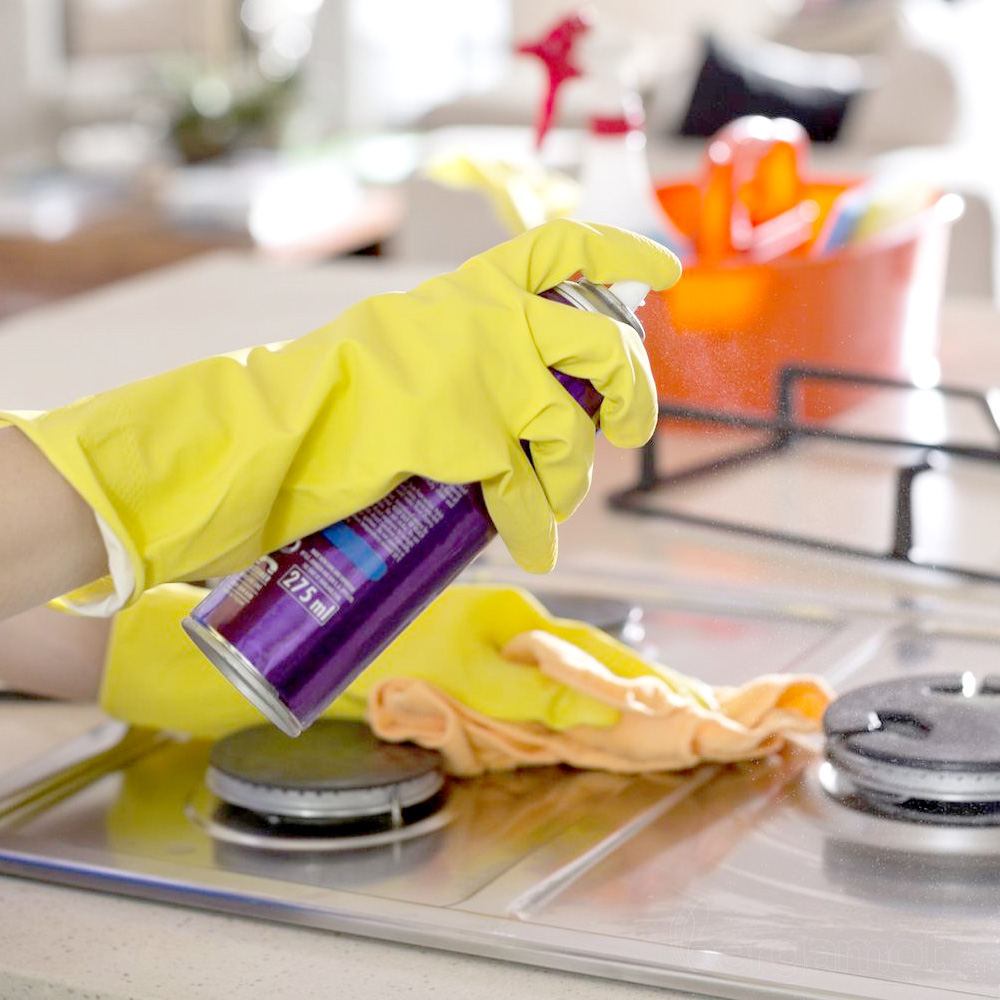
Which glove for which cleaning or pest control task
| Task | What the glove must do | Bergamot option | Datasheet (PDF) |
| Daily cleaning, mopping and washing up | Reusable, longer cuff, comfortable for long wet tasks | Household Latex Flock Lined Rubber Gloves (contains natural rubber latex) | Ask us |
| Washrooms, waste handling, disinfecting touch points | Disposable, latex-free, changed between areas | SE Nitrile Powder Free Examination Gloves, or MaxProtect Nitrile Powder Free Examination Gloves (MaxProtect is more durable) | ⬇ Download SE Nitrile ⬇ Download MaxProtect |
| Diluting and using concentrated chemicals | Chemical splash protection, full texture for wet grip | ChemTough Nitrile Powder Free Examination Gloves | ⬇ Download ChemTough |
| Mixing and applying pesticides, where the label allows disposable nitrile | Chemical splash protection, disposed of after each job | ChemTough Nitrile Powder Free Examination Gloves | ⬇ Download ChemTough |
| Heavy, greasy cleaning: kitchens, bins, drains | Grip on greasy surfaces and resistance to tearing | Grip-X Nitrile Powder Free Gloves (Black), or Grip-X Nitrile Powder Free Gloves (Orange) A heavy-duty nitrile glove with a diamond-textured grip. | ⬇ Download Grip-X Black ⬇ Download Grip-X Orange |
| Front-of-house and light housekeeping | Economical, quick to change | Vinyl Powder Free Examination Gloves, or CPE Disposable Gloves | ⬇ Download Vinyl ⬇ Download CPE |
ChemTough gloves are SIRIM registered.
Always follow the product label and safety data sheet (SDS). If they name a specific glove material or thickness, use that.
Some people are allergic to natural rubber latex. Offer a nitrile alternative to anyone who reacts to latex gloves.
Six glove habits for cleaning and pest control
- Use different gloves for washrooms and for kitchens or food areas. Colour coding makes this easy.
- Change disposable gloves between areas and whenever they are torn or splashed with a concentrate.
- Rinse reusable gloves before taking them off, and hang them to dry.
- For pesticides, dispose of or decontaminate gloves as the label directs, and wash hands after removing them.
- Dry hands fully before putting on gloves, and moisturise after work.
- Check hands for dry, red or itchy skin and report it early.
Getting the size right
A glove that is too tight tears and tires the hand; one that is too loose snags and loses grip. Measure across the palm just below the knuckles. Standard palm widths for nitrile examination gloves (ASTM D6319) are S 80 mm, M 95 mm, L 110 mm and XL 120 mm (each ±10 mm). When buying for a team, ask each person for their size.
Buying for a cleaning contractor, facility team or pest control operator
In Malaysia, the Occupational Safety and Health Act 1994 and the USECHH Regulations 2000 require employers to assess chemical exposure and provide suitable protective equipment. Pesticide users must also follow the label directions for each registered product. Bergamot is a Malaysian glove supplier, supplying cleaning and chemical-handling gloves wholesale by the carton to cleaning contractors, facility managers, hotels and pest control operators, with private-label packing for importers.
Contact us, email info@bergamot.com.my or WhatsApp +6012 714 4186 for samples, specifications and bulk pricing.
Frequently asked questions
What are the best gloves for cleaning?
For long wet tasks, a reusable flock-lined household glove. For washrooms and disinfecting, a disposable nitrile glove changed between areas. For concentrates, a chemical-rated nitrile glove such as ChemTough.
Are nitrile gloves resistant to bleach?
Nitrile gives good splash protection against diluted bleach. For concentrates, use a chemical-rated glove, check the SDS and change the glove if it is splashed.
What gloves should pest controllers wear?
The glove the pesticide label specifies. Where the label allows chemical-resistant disposable nitrile, ChemTough is used and thrown away after each job.
Nitrile or latex gloves for cleaning?
Latex is comfortable and elastic for wet work but can cause allergic reactions. Nitrile is latex-free and resists oils and many chemicals better.
More glove guides by trade
- Gloves for mechanics
- Gloves for panel beaters and spray painters
- Gloves for car detailers
- Gloves for plumbers
- Gloves for concreters and tilers
- Gloves for carpenters and builders
- Gloves for painters and decorators
- Gloves for kitchens and food handling
General information only. Follow the safety data sheet and label of the products you use and your local workplace safety regulations.