
Wet cement looks harmless and does serious damage. This guide to the best gloves for concreters and tilers explains what cement, grout and tile work do to hands, and which glove suits each task.
What cement and tile work does to hands
- Cement burns. Wet cement is highly alkaline. Trapped against the skin it can cause serious burns and ulcers (HSE: cement).
- Dermatitis. Cement abrades and irritates skin, and the hexavalent chromium it contains can cause allergic contact dermatitis. Once a worker is sensitised, later exposure can trigger it again.
- Grout, tile adhesive and sealers. Cement-based grout carries the same risks as cement; epoxy grouts and sealers can also sensitise skin.
- Cut tile, mesh and rebar. Fresh-cut ceramic and porcelain edges are razor sharp.
- Abrasion. Blocks, pavers and rough concrete wear through skin and thin gloves quickly.
What HSE says about gloves for cement
Gloves for wet cement should be waterproof and suitable for alkaline substances (for example, marked EN 374 and tested against alkalis), and long or tight-fitting at the wrist so cement cannot get trapped inside. Some nitrile gloves meet this. Ask us for the datasheet and check it against the product you use.
What the research says
Findings from safety regulators and published studies, mostly from Australia, the UK and the US.
- Wet cement is around pH 12 to 13, while skin is slightly acidic at about pH 4.7. Each pH step is a tenfold change (Australian Family Physician, Lambers and others).
- Cement burns are slow. A splash may not sting, and a burn can take up to 48 hours to show (Australian Family Physician).
- In a five-year review at the Royal Adelaide Hospital burns unit, patients with cement burns waited an average of three days before reaching hospital, and 85% needed surgery, mostly skin grafts (Moran and others, ANZBA 2025).
- Chromium limits work. After Europe capped chromium in cement in 2005, UK rates of chromate dermatitis in exposed workers fell by about 63% (Stocks and others, Occup Environ Med).
- Uncured epoxy grout and its hardener are strong skin sensitisers, and epoxy resin can pass through ordinary rubber gloves in about 30 seconds (DermNet: epoxy resin allergy). Use nitrile, and change it as soon as resin lands on it.
- South Australia’s regulator issued an alert in 2025 after wet cement soaked through a handyman’s trousers and burned both legs badly enough to need skin grafts. It advises gloves made for cement work, such as rubber or nitrile, long sleeves and trousers with a water-resistant outer layer, and prompt removal of wet cement and any clothing it has soaked (SafeWork SA). For pours, a waterproof gauntlet can be worn over a disposable nitrile glove. If cement gets inside, take the gloves off, rinse the skin with plenty of clean water and put on a fresh pair.
- First aid for skin contact: brush off dry powder, rinse with clean water and remove contaminated clothing. See a doctor if the skin later turns red, sore or blistered, even if it did not hurt at the time.
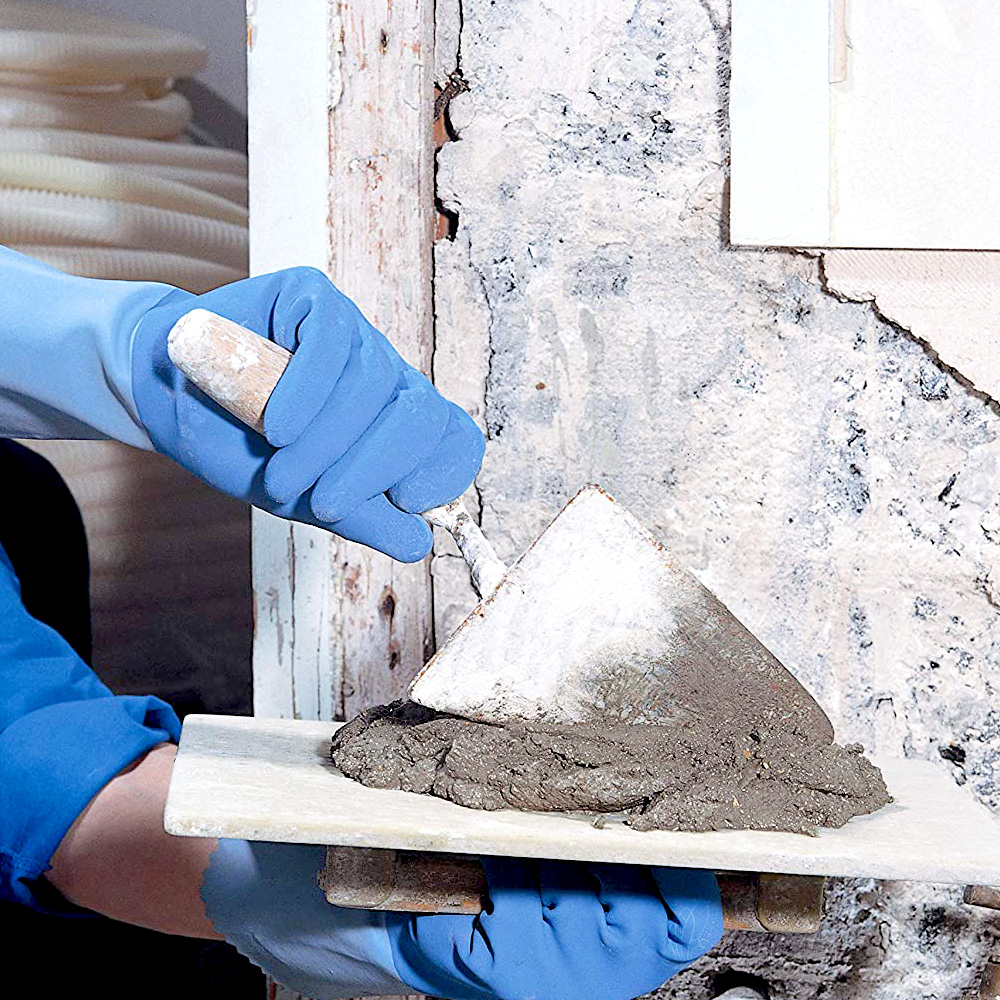
Which glove for which cement or tile task
| Task | What the glove must do | Bergamot option | Datasheet (PDF) |
| Mixing, pouring and screeding wet cement or mortar | Liquid-proof coating over the whole hand, with a cuff that keeps cement out | Fully Dipped Jersey Gloves with Safety Cuff A full nitrile coating on a cotton jersey shell. | ⬇ Download Fully Dipped Jersey |
| Grouting, applying adhesive and sealer | A disposable barrier with grip that survives the job | Grip-X Nitrile Powder Free Gloves (Black), or Grip-X Nitrile Powder Free Gloves (Orange) A heavy-duty nitrile glove with a diamond-textured grip. | ⬇ Download Grip-X Black ⬇ Download Grip-X Orange |
| Mixing and using epoxy grout or chemical cleaners | Chemical splash protection, full texture for wet grip | ChemTough Nitrile Powder Free Examination Gloves | ⬇ Download ChemTough |
| Cutting and handling tiles, mesh and rebar | Cut-resistant work gloves that keep dexterity | Beflex Tungsten Cut Resistant Gloves, or Beflex Cut Resistant Gloves (Tungsten: ANSI cut level A8; Cut Resistant: cut level E) | ⬇ Download Beflex Tungsten ⬇ Download Beflex Cut Resistant |
| Carrying blocks, pavers and bags; dry site work | Abrasion resistance for high-friction work | Beflex Nitrile Smooth General Purpose Gloves, or Beflex Nitrile Foam General Purpose Gloves | ⬇ Download Beflex Nitrile Smooth ⬇ Download Beflex Nitrile Foam |
Beflex and ChemTough gloves are SIRIM registered.
Beflex coated work gloves have a breathable back and are not liquid-proof. Do not use them for wet cement.
Six glove habits for cement and tile work
- Put gloves on before mixing, not after the first splash.
- If cement gets inside a glove, take it off, wash the skin and change to a clean pair. Cement trapped in a glove burns faster.
- Wash cement off skin promptly with soap and warm water, especially at breaks and after work.
- Never kneel or lean in wet cement without waterproof protection.
- Use cut-resistant gloves for tile cutting. Disposable gloves give no cut protection.
- Check hands regularly. Early dermatitis shows as dry, red or itchy skin.
Getting the size right
A glove that is too tight tears and tires the hand; one that is too loose snags and loses grip. Measure across the palm just below the knuckles. Standard palm widths for nitrile examination gloves (ASTM D6319) are S 80 mm, M 95 mm, L 110 mm and XL 120 mm (each ±10 mm). When buying for a team, ask each person for their size.
Buying for a construction or tiling business
In Malaysia, the Occupational Safety and Health Act 1994 and the USECHH Regulations 2000 require employers to assess chemical exposure and provide suitable protective equipment. Bergamot is a Malaysian glove supplier, supplying work gloves and nitrile gloves wholesale by the carton to contractors, tiling firms and building material distributors, with private-label packing for importers.
Contact us, email info@bergamot.com.my or WhatsApp +6012 714 4186 for samples, specifications and bulk pricing.
Frequently asked questions
Why does wet cement burn skin?
Wet cement is strongly alkaline. The burn develops slowly and may not hurt at first, so it is often noticed late. Waterproof gloves and prompt washing prevent it.
Are nitrile gloves good for concrete work?
Nitrile is one of the materials HSE names as potentially suitable for cement, provided the glove is waterproof and rated for alkalis. Disposable nitrile suits grouting and short tasks; use a fully coated glove with a cuff for mixing and pouring.
What gloves do tilers use for grouting?
A heavy-duty disposable nitrile glove such as Grip-X gives grip on the float and sponge and is thrown away after the job.
Can I use fabric work gloves with wet cement?
No. Fabric and breathable-back gloves soak through and hold cement against the skin, which makes burns worse.
More glove guides by trade
- Gloves for mechanics
- Gloves for panel beaters and spray painters
- Gloves for car detailers
- Gloves for plumbers
- Gloves for carpenters and builders
- Gloves for painters and decorators
- Gloves for kitchens and food handling
- Gloves for cleaning and pest control
General information only. Follow the safety data sheet and label of the products you use and your local workplace safety regulations.