
A body shop combines two very different hand hazards: sharp, freshly cut sheet metal on the panel side, and solvents, fillers and two-pack paints on the refinishing side. This guide to the best gloves for panel beaters and spray painters matches each stage of a repair to a glove that suits it.
What body shop hands are exposed to
- Two-pack (2K) isocyanate paints. The UK Health and Safety Executive lists isocyanate paints among the main causes of work-related asthma, and notes that skin contact can cause dermatitis and may also lead to sensitisation (HSE: 2-pack isocyanate paints).
- Thinners, panel wipe and gun wash. Solvents strip the skin’s natural oils and pass through thin gloves quickly.
- Body filler, primer and sanding dust. Fillers and their hardeners irritate skin; dust dries and cracks it.
- Cut and torn panels. Sheet metal edges, trim clips and broken glass cut bare hands and thin gloves.
- Wet sanding and washing. Long periods with wet hands soften skin and make dermatitis more likely.
Gloves are only part of 2K paint safety
Breathing in spray mist is the main exposure route for isocyanates. HSE requires spraying to be done in a spray booth or room, with the sprayer wearing air-fed breathing apparatus. Gloves protect the skin during mixing, spraying and gun cleaning, but they do not replace those controls.
For chemical work, choose the glove from the paint or solvent’s safety data sheet (SDS). No single glove material resists every chemical, and disposable gloves give splash protection only (HSE: choosing the right gloves).
What the research says
Findings from safety regulators and published studies, mostly from Australia, the UK and the US.
- The UK Health and Safety Executive estimates that vehicle paint sprayers are about 80 times more likely to develop occupational asthma than the average UK worker (HSE inspection guidance).
- Skin matters as well as lungs. Safe Work Australia’s guide says respiratory problems may result from skin exposure to isocyanates, that thin latex gloves are unsuitable, and that nitrile of the same thickness resists better (Guide to handling isocyanates).
- A hardener labelled as having no free isocyanate can still be hazardous because of its polymeric isocyanate content (Safe Work Australia).
- In a laboratory test of sprayed clear coat, isocyanates passed through thin latex and nitrile gloves quickly, with latex letting more through. Butyl let none through (Broadwater and others, 2014). If the paint’s safety data sheet names butyl, wear butyl.
- HSE’s 2025 guidance sheets recommend single-use nitrile gloves for mixing 2K paint and for spraying it in a booth (MR1, MR2).
- In a Washington State survey of collision repair shops, 69% of spray painters always wore gloves, but 47% used latex (Ceballos and others, 2011).
- Change a glove when it is wet through, splashed with hardener, or has turned soft, swollen, tacky or brittle (University of Cambridge glove guidance).
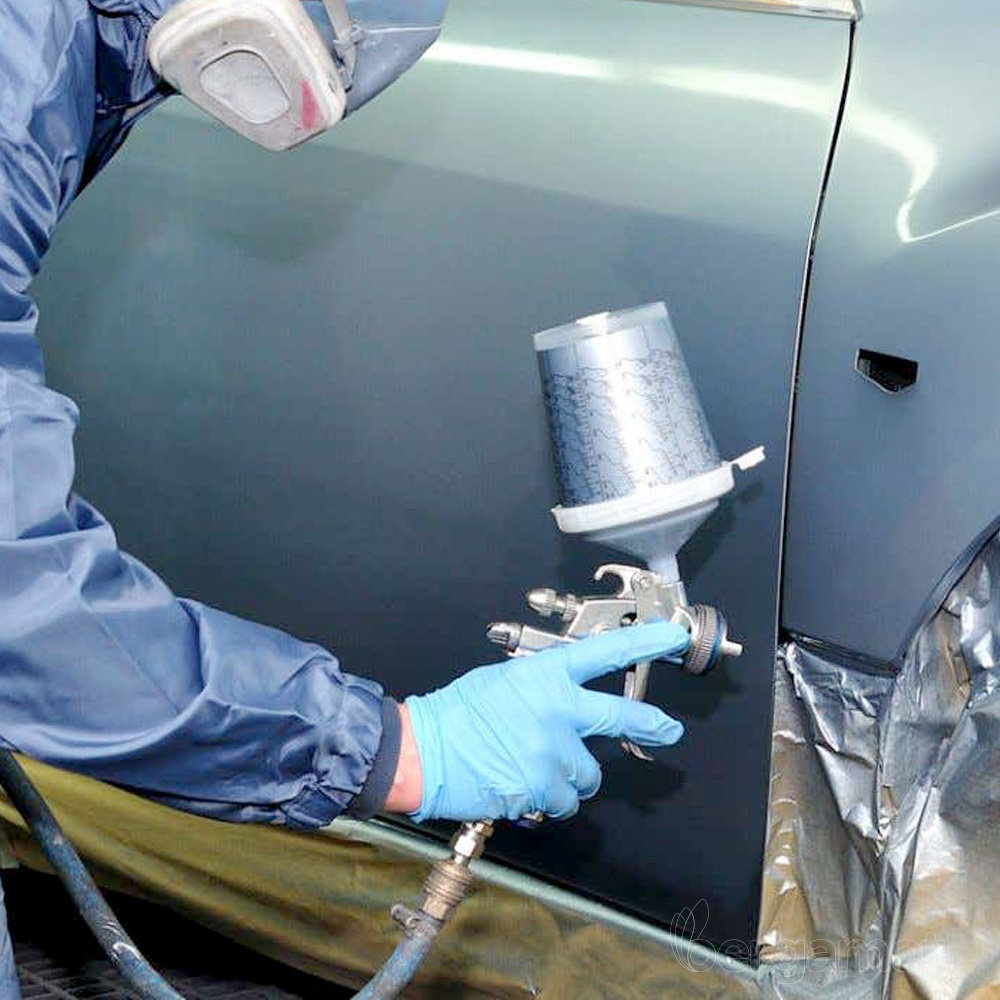
Which glove for which body shop task
| Task | What the glove must do | Bergamot option | Datasheet (PDF) |
| Mixing paint, spraying, cleaning spray guns | Chemical splash protection, full texture for wet grip, changed as soon as it is splashed | ChemTough Nitrile Powder Free Examination Gloves | Download ChemTough |
| Degreasing, panel wipe, masking and prep | Oil and grease resistance with grip | Grip-X Nitrile Powder Free Gloves (Black), or Grip-X Nitrile Powder Free Gloves (Orange) A heavy-duty nitrile glove with a diamond-textured grip. | Download Grip-X Black Download Grip-X Orange |
| Final inspection, polishing, handling finished panels | Thin, tactile disposable gloves that leave no marks | SE Black Nitrile Powder Free Examination Gloves, or MaxProtect Nitrile Powder Free Examination Gloves (MaxProtect is more durable) | Download SE Black Download MaxProtect |
| Dry sanding, filler shaping, fitting trim | Second-skin fit, dexterity, touchscreen use | Beflex 21G PU-Coated Nylon & Spandex Gloves | Download Beflex 21G PU |
| Cutting, stripping and carrying panels and glass | Cut-resistant work gloves that keep dexterity | Beflex Tungsten Cut Resistant Gloves, or Beflex Cut Resistant Gloves (Tungsten: ANSI cut level A8; Cut Resistant: cut level E) | Download Beflex Tungsten Download Beflex Cut Resistant |
Beflex and ChemTough gloves are SIRIM registered.
Beflex coated work gloves are built for mechanical protection and grip. They are not liquid-proof, so wear disposable nitrile for paints and solvents.
Six glove habits for the body shop
- Put gloves on before opening hardener, activator or thinners.
- Change a glove the moment it is splashed with solvent or paint. Do not wait for it to feel wet inside.
- Never wash hands with thinners or gun wash. Use a proper hand cleaner.
- Keep separate gloves for the paint room and the panel shop so paint residue does not travel.
- Swap to cut-resistant gloves before handling cut panels. Disposable gloves give no cut protection.
- Check hands regularly for redness, itching or cracking and report it early.
Getting the size right
A glove that is too tight tears and tires the hand; one that is too loose snags and loses grip. Measure across the palm just below the knuckles. Standard palm widths for nitrile examination gloves (ASTM D6319) are S 80 mm, M 95 mm, L 110 mm and XL 120 mm (each ±10 mm). When buying for a team, ask each person for their size.
Buying for a body shop or supplying the refinish trade
In Malaysia, the Occupational Safety and Health Act 1994 and the USECHH Regulations 2000 require employers to assess chemical exposure and provide suitable protective equipment. Bergamot is a Malaysian glove supplier, supplying nitrile and work gloves wholesale by the carton to body shops, paint distributors and automotive trade suppliers, with private-label packing for importers.
Contact us, email info@bergamot.com.my or WhatsApp +6012 714 4186 for samples, specifications and bulk pricing.
Frequently asked questions
Are nitrile gloves suitable for spray painting cars?
Nitrile is the usual choice for splash protection against automotive paints and many solvents, but resistance depends on the product. Check the SDS, use a chemical-rated nitrile glove such as ChemTough for mixing and gun cleaning, and change it as soon as it is splashed.
Can I use latex gloves with thinners?
No. Natural latex degrades quickly in contact with solvents and oils, and some people are allergic to it. Use nitrile.
Do gloves protect me from isocyanates?
They protect the skin. They do not protect the lungs, which is the main risk. A spray booth and air-fed breathing apparatus are needed for spraying 2K paints.
What gloves stop cuts from sheet metal?
Use a cut-resistant work glove such as Beflex Tungsten (ANSI cut level A8). Disposable gloves tear on the first sharp edge.
More glove guides by trade
- Gloves for mechanics
- Gloves for car detailers
- Gloves for plumbers
- Gloves for concreters and tilers
- Gloves for carpenters and builders
- Gloves for painters and decorators
- Gloves for kitchens and food handling
- Gloves for cleaning and pest control
General information only. Follow the safety data sheet and label of the products you use and your local workplace safety regulations.